Sunday, November 6, 2022

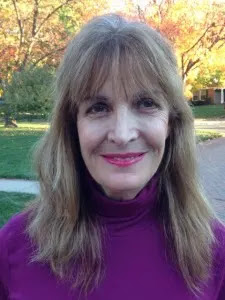
Lucille Lang Day, Wampanoag-descent poet, writes bold beauty

LUCILLE LANG DAY 

The talented, generous writer Lucille Lang Day is author most recently of Birds of San Pancho and Other Poems of Place (Blue Light Press: First World Publishing, 2020). She contributes to the literary community in so many ways. First, she is publisher of Scarlet Tanager Press, an independent press that publishes Indigenous and other writers. She edits anthologies, including Red Indian Road West: Native American Poetry from California (co-edited with Kurt Schweigman, Scarlet Tanager) and Fire and Rain: Ecopoetry of California (co-edited with Ruth Nolan. She organizes readings, supports Scarlet Tanager authors at the Associated Writing Programs conference, and appears at events. In addition to her support for others, her own poetry is dynamite. The title poem of her latest book Birds of San Pancho begins:

A great kiskadee sits on the casa wall

belting its exuberant song above

the dusty, cobblestone street. The bird

is masked like a raccoon, its breast

yellow as the butterflies that flit

amid hibiscus and bougainvillea. . . .

The poet describes the scene with bold brushstrokes, unafraid of interpretive adjectives like “exuberant” and a vivid comparison of a bird’s head markings to a raccoon’s mask. She is in control of syntax as she effortlessly progresses through the poem. Her balance of description and reflection keeps the poem interesting as it builds to its ending point:

Later, at the lagoon, a great blue heron,

a little blue heron, a green heron,

a night heron, two great egrets, eight 

snowy egrets and twenty cattle egrets

gather while brown pelicans dive

for fish and the sun’s bright disk sinks 

into the sea. When it disappears,

the egrets rise in groups and pairs

to settle in two coconut palms

for the night. Oh, to sit up there too—

safe, having eaten my fill—with

folded wings, watching over creation.

Focus is on the birds and nature’s patterns, not the poet’s life and ego—until the very end when the poet enters into the moment to share, not to overwhelm the entire poem. Her “Vincent’s Bedroom at Arles” is a perfect double ekphrastic poem—about the painting and about the physical room itself—and then it turns out the Arles citizenry recreated this room because the original was destroyed during World War II.  This gives Day occasion to ponder intersections of fiction and reality on many levels, made (seemingly) effortless in her poet’s spell. “At Lake Tahoe” is another well calibrated poem about the poet’s Wampanoag ancestry set side-by-side with California Indigenous people of this place, the Washoes. It ends:

Yet in summer Washoes still do the Pine Nut Dance

and Wampanoags do the Grass Dance to keep the world

in balance and remind us that the Earth is living, every

rock is sacred, and every tree and salmon has a soul. (79)

Day is able to tie two coasts together in this ending—the Massachusetts Wampanoags and the California Washoes. This understanding of unities is one of the pleasures of the collection. Day has a science Ph.D., and also M.F.A. in creative writing. She puts these two perspectives to good use in her writing. It is precise, complete, and transformative.

#

Interview with SF Review of Books Zara's Blog (zararaabblog.blogspot.com)

Poem by Lucille Lang dYetay, Valpraiso, “Birds of San Pancho”

Poem by Lucille Lang Day  Poetry Foundation, “Tooth Painter,” 

Video of Lucille Lang Day  Berkeley Public Library poetry reading,

Video of Lucille Lang Day “How to Publish a Memoir,”

Lucille Lang Day is the author of seven full-length poetry collections and four poetry chapbooks. Her latest collection is Birds of San Pancho and Other Poems of Place (Blue Light Press, 2020). She has also edited the anthology Poetry and Science: Writing Our Way to Discovery, and she coedited Fire and Rain: Ecopoetry of California and Red Indian Road West: Native American Poetry from California. Other publications are two children’s books and a memoir, Married at Fourteen: A True Story. Her many honors include the Blue Light Poetry Prize, two PEN Oakland-Josephine Miles Literary Awards, the Joseph Henry Jackson Award, and eleven Pushcart Prize nominations. She holds an M.F.A. in creative writing from San Francisco State University, an MA in zoology, and a Ph.D. in science/mathematics education from the University of California at Berkeley. She lives in Oakland, California. She is of Wampanoag, British, and Swiss/German descent. www.lucillelangday.com

Denise Low, Kansas Poet Laureate 2007-09, won the Editor’s Choice Red Mountain Press Poetry Award for Shadow Light. Other publications are memoirs The Turtle’s Beating Heart: One Family’s Story of Lenape Survival (U. of Nebraska Press,) and Jigsaw Puzzling: Essays in a Time of Pestilence (Meadowlark, Sept. 2022); Wing (Red Mountain, Hefner Heitz Award finalist); Casino Bestiary (Spartan); and Jackalope (fiction, Red Mountain). She is co-author of Northern Cheyenne Ledger Art by Fort Robinson Breakout Survivors (U. of Nebraska Press, Ks. Notable Book). Her PhD in literature and creative writing is from the University of Kansas, and her MFA is from Wichita State. At Haskell Indian Nations University, she founded the creative writing program. She teaches for Baker University’s School of Professional and Graduate Studies. Board memberships include Indigenous Native Poets (In-Na-Po) and Associated Writers and Writing Programs (past president and contributing editor). Her heritage includes British Isles, German, and Lenape/Munsee (Delaware). She lives in California’s Sonoma County.www.deniselow.net

Monday, August 29, 2022

Denise Low: The Ethics of Endorsements and Book Reviews


Years ago I began book reviewing for the Kansas City Star and for literary journals. When I signed a contract as a freelancer for the KC Star, I learned the importance of ethics for this respected newspaper, which has won Pulitzers. Informally, as editor of the Cottonwood Review and then on the board of Bob Woodley Memorial Press (until I published a book with them). The ethics were obvious and not complicated: do not review or endorse any publication where there is a conflict of interest. Conflict of interest especially involves exchange of money.


These days, after print-on-demand has made self-publishing an industry, these ethics are not always apparent. Some important review venues sell reviews, like Kirkus Review Indie, where reviews cost about $500. Kirkus has been a long-time, respected publication, and its main company still is. This side-gig company is a moneymaker that exploits vanity authors. I avoid Kirkus completely now. This is old school; the basic rules of book reviewing are these:
  • Do not review books by family members, employers, employees, and others with whom you have a close personal relationship. 
  • Do not review books for which you have received money for any part of the publication process--proofing, copyediting, design, promotional work. 
  • Do not review books you have not read. 
  • Do not write promotional reviews under a pseudonym.
  • Do not do anything sketchy, as your name as an ethical person is important in this business.
  • Selling review copies is considered unethical.
Ethical practices for endorsements (blurbs) are a bit more relaxed, as often people blurb for friends and for students. However, once money exchanges hand for any part of the writing-editing-publishing-promotion process, you may not endorse nor review the publication.  Do not use any text for a blurb or other promotion without permission. A famous poet once wrote me a great compliment about a book in a letter, and she was insulted when I asked to use it as a blurb. Her reaction has stayed with me!

This is a first post about this issue, but a situation arose where the conflict-of-issue was clear, and the other party had never learned of the ethics of writing reviews and endorsements.


Sunday, August 7, 2022

Annie Newcomber interviews J. Kahn

Kansas City has a lively arts scene, including literary arts, and one of the most compelling voices is that of
Jemshen Khan. Poet Annie Newcomer interviews him about his recent book at  Flapper Press Poetry Cafe. He tells about his mission in writing poetry: Resistance writing, especially, is a path of one's own making. Devoting writing energy to beliefs that run contrary to established interests is a step toward a specific type of freedom, waking a few readers from the trance of mainstream propaganda." His chapbook Speech in an Age of Certainty is available from Finishing Line Press. The interview also has a preview of his next book, The Popol Vuh: An Illustrated Epic, based on a Mayan creation narrative. I interviewed him also for this blog, Denise Low Interviews Jemshed Khan. Khan is a poet working from his experience donating medical assistance to Guatemalan people, his experience as an immigrant, and his experience as a person of conscience. Please enjoy his humanity and grace in this interview, and thanks to Newcomer for bringing this to the literary community! Her chapbook Comets: Relationships That Wander is from Finishing Line Press. Viva Kansas City! 


Tuesday, July 19, 2022

Poetry Unbound discovers blood messages in Denise Low's poetry

I so appreciate the close reading of my poem "Walking with My Delaware Grandfather" in

their Poetry Unbound series. Their commentator 
Pádraig Ó Tuama says, "This poem has a deep knowledge about what it means for your own body to bear witness to your past, to your generations past. The grandfather in this poem is one of the four generations being evoked, because we hear of Denise, we hear of her mother, of her grandfather, and that man’s mother, also. And he’s walking, and he doesn’t seem unsettled, but he seems to be looking for a home to be found in the body and life and experiences of his granddaughter. And an invitation from this is to consider, what are the ways within my past generations are looking for a home, maybe a resolution, maybe an opportunity for change, maybe an opportunity for defiance, maybe an opportunity to say: 'I’m still here'?" Read or listen to the poem here:

Tuesday, May 10, 2022

DENISE LOW interviews Twin Cities writer KATHRYN KYSAR

Kathryn Kysar is the author of the poetry books Dark Lake and Pretend the World, and she edited Riding Shotgun: Women Write about Their Mothers. We attended graduate school together at Wichita State University, one of the oldest MFA programs in the country, and we have remained friends. Kysar writes passionately and cares passionately about participating in literary communities. She founded the creative writing program at Anoka-Ramsey Community College, and she has been active as a board member of major literary organizations (AWP, Rain Taxi) as a behind-the-scenes booster. She’s recently published poetry in The Mollyhouse and Sleet (forthcoming). Links to recent poems are “After You Leave” in Voicemail Poems; “Photograph: Little League Practice” in The Under Review; “Lake Superior: Three Scenes of Summer” in About Place Journal. This email interview takes place May 10, 2022. 

Denise Low: You are one of the most socially committed people I know. How does this affect your choices in writing?

Kathryn Kysar: I am in a constant state of growth and self-correction in my struggle with internalized racism. I am a product of our patriarchal capitalist society that is based on genocide and slavery, and I continue to learn about this history and how my privilege warps my perceptions. I am currently writing a travelogue about a driving trip I took with my son last summer that examines our family’s settler colonialist past and the false stories conveyed through the generations.

DL: Writing about your second book of poetry Pretend the World (Holy Cow! Press), Rigoberto González writes, “Kysar's ability to politicize parenting and gender offer a gripping but blunt way of seeing the lives we create, the wars we wage, the things we consume, and the connections we make without overbearing sentimentality or righteousness.” (Poetry Foundation). How has being a parent informed your writing subject matter and your writing process?

KK: Gender inequities continue to be a central focus of my writing. As the parent of a transgender child, I have closely witnessed the horrors of transphobia and the deep harm of daily microaggressions. Is the personal political? Of course. Our lives, including the act of raising children, take place within our racist, sexist, and classist society. To ignore the context of within which we parent would be ignoring these truths. One function of poetry is to unveil the truth, to say the unsaid, hopefully “without overbearing sentimentality or righteousness.”

DL: Collaboration is one of the ways you work with community. I remember for Pretend the World that you collaborated with visual artists to create a show of artworks that responded to individual poems. What was that like for you, to see your poems re-envisioned in another genre? What other collaborations have you been involved in recently?

KK: Thanks for asking about collaboration! The visual art shows that accompanied Pretend the World were astounding to me. I was in awe that my humble poems could trigger such engaging and varied pieces. I invited five artists who work in different mediums to respond to the poems in the book with their artwork. Some pieces, like Jan Elftmann’s sculptural white horse, referenced a single line in a poem. Philip Noyed’s “Dresses Everywhere” is a hanging globe of little dresses that echoed an entire poem as well as the book’s title. The show was presented in several galleries, and Jes Lee’s poetry videos are available on YouTube. It was a joyously fun project.  I am currently writing poems in response to a series of Angela Spencer’s tarot card paintings, and we have upcoming shows scheduled for 2022-2023. My last big project was a collaborative recording of the poems from Pretend the World. I invited guest poets, musicians, and singers to record a poem. One of the happiest moments of my life was sitting in the studio sound booth and hearing how others understood and expressed my work so eloquently. 

DL: In an interview for Write On Door County (2017), you wrote: “I deeply enjoy collaborative creation across the arts: I have had several shows with visual artists, written poems to pre-recorded music, and regularly perform with an improvisational poetry/music group called the Sonoglyph Collective. A sample Sonoglyph performance is “Escape from Paradise Iowa.”  The musicians in this group are dynamite! What have you learned from this project?

KK:  Since our graduation reading when I read my poems accompanied by a musician, I have been striving to take poetry off the page. The Sonoglyph Collective is an improvisational jazz/poetry group featuring four poets and three musicians: Sean Egan on clarinet, Jonathan Townsend on drums, Aaron Kerr on bass, with poets Lynette Rein-Grandell, Hawona Sullivan Janzen, Ibe Kaba, and myself.  We blend the spoken word with music in improvisational ways. Our performances bring my poetry into the bliss of making meaningful sound with others. I have always been deeply connected with music—I worked in the music business for five years before starting my present job—and had always longed to be in a band. There is a connection, a creative energy, in the process of musical performance that I do not gain any other way. 

DL:  I notice you have video poems on YouTube, “Hand Sisters” and “Love Poem.” In addition to poetry, you have written essays and travel writing. What are some of your current writing projects?

KK: I am always, of course, writing poems, but my recent focus has been writing creative nonfiction. My lyric essays are constructed much like poems and weave dense imagery with insights and observations, often about the past. You can read some of my recent CNF work in Slag Glass City and The Mollyhouse.

DL: Is there anything else you would like to add?

KK: Thanks so much for this conversation!

Kathryn Kysar is the author of two books of poetry, Dark Lake and Pretend the World, and she edited the anthology Riding Shotgun: Women Write About Their Mothers. She has received fellowships and residencies from the Anderson Center for Interdisciplinary Studies, Banfill-Locke Center for the Arts, the Minnesota State Arts Board, the National Endowment for the Humanities, Tofte Lake Center, and the Oberholtzer Foundation. Her poems have appeared in anthologies such as To Sing Along the Way and Good Poems, American Places. Kysar has served on the board of directors for the Association of Writers and Writing Programs (AWP) and Rain Taxi Review. She is the founder of the creative writing program at Anoka-Ramsey Community College and offers manuscript consultations through The Loft Literary Center. Twitter: @darklake Instagram: @Pretendtheworld


Thursday, April 14, 2022

DaMaris B. Hill brings power to BREATH BETTER SPEND: Living Black Girlhood


Be prepared to rage, sing, cry, and learn from this new hybrid collection Breath Better Spent (Bloomsbury) from one of the most powerful voices in the USA today. Dr. Damaris B. Hill writes about unspeakable atrocities as in "Kamille 'Cupcake' McKinney," a Black child stolen at a birthday party, and the complicity of local law enforcement, ending with "judge slapping his knees has a pocket full/ of opiates and promises for the young girl/ kneeling under his dinner napkin" (p. 87). Hill pulls together stories of Black womanhood, from the opening inscription to Zora Neale Hurston to Whitney Houston to Aretha Franklin ("What You Talkin' Bout") to her own younger self. The result is a book-length tour-de-force. This book deserves a wide audience, especially in times when the Senate hearings of Ketanji Brown Jackson expose the blatant racism of some of the highest USA elected representatives. Thank you, Dr. Hill, for this testament to strength.

DaMaris B. Hill, PhD, is the author of A Bound Woman Is a Dangerous Thing, an NAACP Image Award Finalist; The Fluid Boundaries of Suffrage and Jim Crow: Staking Claims in the American Heartland; and a collection of poetry, \Vi-ze-bel\ \Teks-chers\(Visible Textures). As with her creative process, Hill’s scholarly research is interdisciplinary. An Associate professor of Creative Writing at the University of Kentucky and a former service member of the United States Air Force, she lives in Kentucky. www.damarishill.com Advertising & Promotions0 TOC0

Sunday, March 13, 2022

KIM TEDROW WRITES POEM after DENISE LOW'S "TWO GATES"

Thanks to Kim Tedrow of Lincoln, Nebraska for her modeling a poem after my "Two Gates." This is part of her 30-day commitment to write a poem a day for Tupelo Press's 30/30 Project, a fundraiser: "Each month, volunteer poets run the equivalent of a "poetry marathon," writing 30 poems in 30 days, while the rest of us sponsor and encourage them every step of the way.

Here is my poem:

TWO GATES by DENISE LOW


I look through glass and see a young woman
of twenty, washing dishes, and the window
turns into a painting. She is myself thirty years ago.
She holds the same blue bowls and brass teapot
I still own. I see her outline against lamplight;
she knows only her side of the pane. The porch
where I stand is empty. Sunlight fades. I hear
water run in the sink as she lowers her head,
blind to the future. She does not imagine I exist.

I step forward for a better look and she dissolves
into lumber and paint. A gate I passed through
to the next life loses shape. Once more I stand
squared into the present, among maple trees
and scissor-tailed birds, in a garden, almost
a mother to that faint, distant woman.

https://www.poetryfoundation.org/poems/55185/two-gates

And here is Kim Tedrow's poem "after" this one: Zoom Meeting / Kim Tedrow

after Denise Low

I look at myself on the screen


and I see myself at twenty,
hair straight and long, parted
down the middle for the first time
since before I knew myself,
except now I’m paying attention.
I see her loneliness as a quarry
from which she mines men
to whom she is disposable.
She wakes in someone’s home
and leaves without her shoes
so as not to wake him.
She wants to be a secret.
Her apartment overlooks a lot
where musicians park by the bar.
Later she goes there to dance.
Gladiolas grow next to the stairs.
Her father stops by
when she is not there
and tucks a picture of himself
into the door frame. She writes
“I could not bear to lose him.”
I see her and bring her back
to myself. She does not want to come
here–she cannot imagine the life
we live now–alone and happy.
In the meeting when it’s my turn
I speak up, I make myself known.

https://www.tupelopress.org/the-30-30-project-march-2022/

Kim Tedrow works as a Science Writer in Lincoln, Nebraska. She has a Master of Arts in creative writing from the University of Nebraska–Lincoln. She’s been published in Prairie Schooner and several anthologies, including Nasty Women Poets: an Unapologetic Anthology of Subversive Verse, edited by Grace Bauer and Julie Kane. She lives in a cute little granny house with three cats.

Tuesday, January 18, 2022

Denise Low comments on William Stafford's "Listening"

Remarks presented at the Watkins Museum celebration of William Stafford's birthday, January 15,

I am so honored to have known William Stafford, born January 17, 1914, at the beginning of my writing life. His person and his poetry influenced me to strive for reflective engagement with natural and human surroundings. He uses poetry for play, for surprises in language, for folding the outside patterns of nature into my inner life, comingling the two. He fit his poetics to align with the unique grasslands ecology of the region where he grew up, from Liberal to Hutchinson to Lawrence—where he received his BA and MA. The sparse landscape of horizontals with gentle angles of ridges creates a backdrop where any vertical, like a watermill or steeple or horse, becomes dramatic. Human experience is set against an enormous sweep of sky.

 The most important aspect of Stafford’s poetics is his humility, which gives him the ability to step aside from the role of master over the wilderness, which was the biblical tradition. Instead, he took the pose of one who listens and learns, as in this favorite of mine, which suggests his Indigenous background: https://www.ayearofbeinghere.com/2014/06/william-stafford-listening.html

         Listening by William Stafford:

My father could hear a little animal step,

or a moth in the dark against the screen,

and every far sound called the listening out

into places where the rest of us had never been.


More spoke to him from the soft wild night

than came to our porch for us on the wind;

we would watch him look up and his face go keen

till the walls of the world flared, widened.


My father heard so much that we still stand

inviting the quiet by turning the face,

waiting for a time when something in the night

will touch us too from that other place.

 He mixes the human and natural worlds, with the “moth in the dark against the screen” and the portal between the two realms, the “porch.” The porch becomes the interface between mortality and immortality.

 A second point about Stafford’s poetics: his discussion of ethics. “Traveling Through the Dark” is the most well-known example of this, where he pauses and could “hear the wilderness listen.” He reverses the role of judge and makes readers aware that their actions, like his, have moral consequences.  And finally, the language is subtle, like the landscape, with deep images that continue to build layers throughout the years. The dead deer by the side of the rode is singular and memorable. Not many details appear in the verse, and the image of the deer is the point, not the poet’s acrobatic use of vocabulary and rhetorical devices. Here is the poem “Traveling Through the Dark by Willilam Stafford: https://www.poetryfoundation.org/poems/42775/traveling-through-the-dark

My poem responds to “Listening.”

Variations on Keening by Denise Low

We would watch him look up and his face go keen. William Stafford

My father’s face goes keen. Cicadas drone as

darkness walls us in. His eyes are echoes


on fire. He speaks kennings. His wise eyes

turn blue fire. His prophet’s sight pierces night


with keen perception. Agate rings lie buried

in river mud. His eyes see their spirals.


A sunfish rouges under a keen-bladed knife.

Sequin scales flake. Its eyes darken into a stare


beyond ken. I keen. My father’s twin-star eyes

gaze equally into and out of the dark.

                                                            Wings (Red Mountain Press, 2021)

 My play on “ken” and “keen” emphasizes my wonder at the same cosmos that Stafford knew in the grasslands of Kansas. I conflate him with my father, born a few moths after Stafford and twenty miles away. Stafford is my poetic father. His example of self-effacement, images, and focus on a few key words—these I try to follow. www.deniselow.net

Tuesday, August 31, 2021

Denise Low interviews Jemshed Khan about Speech in an Age of Certainty

The Colonised Mind by Jemshed Khan
               What any colonial system does: impose its tongue on the subject races.
        ―Ngugi wa Thiong'o,  Decolonising the Mind

For me, it is already done:
my parents' ghazals shushed and mute;
their language siphoned away
by force of nursery rhyme, church choirs,

by various baptismal schemes.

Colonial garrisons occupy
the language centers of my brain―
my thinking circuits click the Anglo way.
Something traded once for wampum, 
Venetian beads, cowrie shells...
my tongue twists but it cannot say.

DNA still drives my bones and skin
but I am tongue-tied, beset historically.
Far from nest or clan or den,
my diaspora brain adapts as best it can―
colonised because language can.

from Speech in an Age of Certainty by J. Khan (Finishing Line Press, $14.99, 36 pages) 

Email Interview 8.31.2021:
Denise Low: Your title of this book of passionate involvement with social justice is Speech in
an Age of Certainty, based on a poem’s title. What led you to choose this as the book title?
Jemshed Khan: Great question. We live in a time when many people seem so certain and so vocal that their viewpoint is correct. Our leaders, on the other hand, give lip service to social justice but will not vote for any real change in military spending, healthcare, or housing because it will anger their corporate donors. Yet we cling so fervently to what little leadership we have left to believe in! It is this misplaced certainty that I am trying to disassemble in the reader’s mind. Of course, this is a Quixotic goal, but this is the nature of activist writing: to illustrate a counter-narrative in the face of overwhelming corporate and government power, media bias, and censorship. 
D.Low: The cover art of your book is striking—a blindfolded man holding an image of a single

eye as a political sign, and a row of eight figures dressed in black. Why did you choose this image? What does it signify to you?
J. Khan: The blindfolded prophet holding up an eye is symbolic of the act of purporting to have a truth.  The ominous crowd is vaguely sinister. A Matrix-like background implies contemporary digital relevance. All of these elements, for me, represent the false portrayals of reality that Americans navigate on a daily basis. The cover is designed to create a suspicion that some manipulation lurks beneath the surface.
D. Low: The poem “Dead Boys” begins with reference to a camera’s point of view: “The camera pans hillside jungle / zooms to our hero / body splayed, face up, / and stubbed by a missing limb” (18). Media play important roles in your book as source material and as models for structure. Can you discuss your relationship to media and how you work with them?
J. Khan: First off, I am not on FB, Twitter, TikTok, Instagram, etc. As a writer hoping for an audience this is hugely disadvantageous, but I am opposed to the financial mining of personal data.  Second, I try to demonstrate how mass media and entertainment are the primary methods of programming the US population to accept “forever wars.”  Noam Chomsky pointed this out in Manufacturing Consent. 
     First-person shooter video games, multi-player online combat games, and Hollywood thrillers are developed with military input: the so-called Military-entertainment complex has its own Wikipedia page.  I am not saying that military input is bad, but the failure to openly communicate this to the public is emblematic of the extent to which the ruling elite manipulate the public, even children, without any pretense of transparency. We live in an age where much of our reality and our children’s reality is manufactured by the media in concert with institutions that are no longer subject to moral hazard or constitutional restraint. This is so pervasive that we don’t even question it. The net result is that the public treasury supports wealthy and wasteful private sector corporate interests at the expense of the overall public good, for example, billionaire wealth increased 44% during COVID, a time of serious unemployment and homelessness.
     My relationship with the mainstream media is one of caution. I do not want to be labelled a troublemaker and have my travel rights restricted as has happened to several Western journalists who write outside the accepted establishment guidelines. While the reach of poetry is limited, the arbitrariness with which our government can and will imprison individuals is not widely appreciated. Still, I wish my work to have impact as a counter-narrative. I am exceedingly grateful for the rights afforded to me as an immigrant and US citizen: to be accepted in US society and engage in passionate free speech of the type that is not tolerated in most countries. When I criticize the misuse of power, I am exercising my right to do so. Free speech!
D. Low: How does your experience as an immigrant writer inform your writing?
J. Khan: Well, I love the good in America. Like many readers I have a safe home, leisure time to read, travel activities, three meals a day, healthcare, a rewarding career. Indeed, from a personal perspective, I have no complaint. What little racism I have encountered in the US over the last 40 years was of trivial emotional or physical consequence compared to the overwhelming generosity that is the norm. America has been an awesome privilege for me and my parents in our immigration and journey.
     Therefore, what I have to say about the shortcomings of America relates to the disadvantage of others more than to me. One of my poems, “Maryville High School,” explores this. There are many wrongs. Writing through and about them has helped me come to terms with the limited impact an individual has on addressing the failings of society. 
D. Low: What is your recent work like? How does it relate to the poetry in this book?
J. Khan: I am in the midst of an epic poem collaboration with artist Leonard Greco where we follow the Mayan Hero Twins’ journey into the underworld. This project overlaps my current book in terms of subversive undertones and populist sentiment. 
     The conquest of the Mayans by the Spaniards was driven by pure colonialism and exploitive greed only matched at the time by the North American genocide against the First Peoples and subsequent North American slavery.  Leonard and I know we must acknowledge this history and deal with it in our revisiting of the myth. There is a line between accessing another culture’s mythology versus appropriating. This is difficult terrain as it strikes at the motives of the writer and requires appropriate distance, deferential tone, and sensitive treatment of subject matter. I am reading on how other poets have dealt with this; Derek Walcott in Omeros, Edward Kamau Braithwaite in Masks, and Michael Bazzett in recent translation. It is a great time to be writing. We will find our path.

Jemshed Khan lives and works in Kansas and Missouri. He has published in diverse magazines including Unlikely Stories, Rigorous, Rat's Ass Review, Chiron Review, Clockwise Cat, shufPoetry, Barzakh, pureSlush, Fifth Estate, I-70 Review, califragile, Coal City Review, San Pedro River Review, and Writers Resist. He has served as a guest editor for Glass: Poets Resist, was nominated for The Pushcart Prize XLIV, has completed a chapbook, and is mulling a book-length collection.

Wednesday, March 10, 2021

Poet Bill Sheldon publishes "What I Know Today" online with Coop: Poetry Cooperative

The Kansas group poetry site, 150 Kansas Poets, has revamped and is now Coop, 

March is my month to curate, and here is this week's poem by William Sheldon of Hutchinson. He is a Mammoth Publications author, website:


What I Know Today
The opposite of life is…
Well, death’s opposite is hunger
“Love and death,” the poet
says, “love and death.” Horsetail
clouds framed by a window tease
dying leaves, red in setting sun.
 Bah.
All preamble to my saying again,
how much I love this graveyard
we tread daily. Let me walk thigh-
deep in the river, sit under winter’s
red skies.  We can be friends, but dirt
is my only lover.  We will lie together,
rise in each other’s clothes.

Here are submission guidelines for this now national cooperative poetry project: Theme: “I’m Speaking: Renewal and Change.”  We hope poems that respond to this theme are far-seeing and diverse. We welcome feminist work.  We welcome anti-racist work.  We hope to support many communities by sharing voices from varied experiences.  Work need not be overtly political, and may speak to either renewal or change in its themes. In a time of pandemic, global warming, attacks on truth, and the pillars of democracy, change may feel both necessary and terrifying; we look for poems that help navigate challenging times.

Quality: Please send us your strongest work aiming for the most powerful poems you can write.  We prefer imagistic poems that surprise and challenge.  We look for poems that move us.  We want lines we can quote.  Poems to recite.  Poems to hold close to our hearts.

Submission: Send us no more than five poems and a 50-word third person bio note in a single Word or RTF document to KSPoetryCoop at gmail.com.  Your single document must be formatted in this way: Your name at top left of the document (not in the header) followed by your email address, a list of the titles of the poems included in the document (also flush left), bionote, and then the poems exactly as you hope they will be printed.  In your bio note of no more than fifty words, feel free to include hyperlinks to your appropriate websites or books.  Please include italics as usual for magazines and books.  Please do not use page breaks but instead just leave about 4-5 lines between poems.

Here is the story of Coop from their website: "This site owes its inception to Caryn Mirriam-Goldberg who started the site as part of her duties as Kansas Poet Laureate with the intention of collecting poems to celebrate the state sesquicentennial. By 2013 Mirriam-Goldberg had created a site where a community of poets curated poems to speak to themes vital to many of us in and beyond Kansas and the heartland. The site changes themes periodically while collecting and publishing the poems from the previous theme. This evolution has lead us to the current name, The Coop: A Poetry Cooperative.

Laura Lee Washburn has worked as Editor-in-Chief or Chief Curator since 2020, after serving as a help to Mirriam-Goldberg’s site management.  In 2020, Laura Lee Washburn was joined by Katelyn Roth and Morgan O.H. McCune as additional site managers and editors.  Throughout the coming months, Poetry Cooperative will continue the tradition of monthly rotating ed