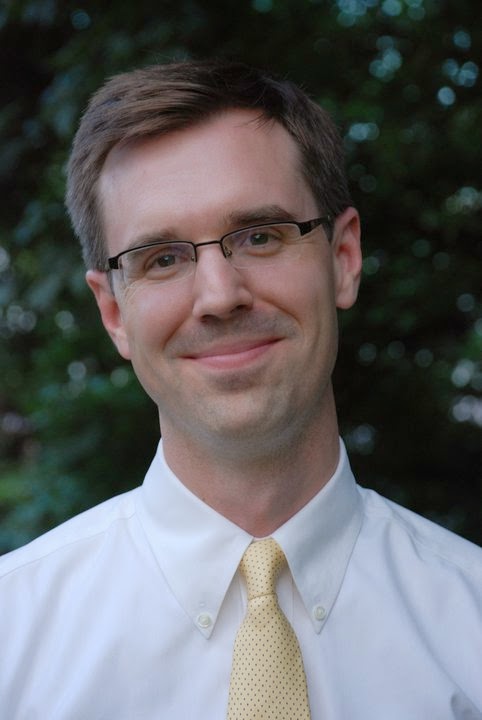
Showing posts with label Eric McHenry. Show all posts

Thursday, December 21, 2017

Eric McHenry Wins Award from TLS

Eric McHenry Wins The Mick Imlah Poetry Prize 
Congratulations to Washburn professor and 5th Kansas Poet Laureate Eric McHenry, who is second-place-tie winner of the Mick Imlah Poetry Prize of the Times Literary Supplement. The prize is named after the former TLS poetry editor Imlah. TLS informs readers that “almost 4,000 poems” were entered in the contest. Judges were Alan Jenkins, A. E. Stallings and Andrew Motion. Katherine Lewis won first place, and Emily Yaremchuk shares the 2nd place award with McHenry. Jenkins notes of “Picking a Prophet” by McHenry: “[its] reasonable tone and unostentatious rhymes convey a sophisticated, almost offhand authority.” Third prize winner is Allen Braden. Jenkins supports the idea of poetry contests: “Art is not a competition; but a competition may encourage art, and reward it.” To read further details and read the winning poems, follow this link. https://www.the-tls.co.uk/articles/public/mick-imlah-poetry-prize-winners/?CMP=Sprkr-_-Editorial-_-TheTLS-_-Unspecified-_-TWITTER

Eric McHenry grew up in Topeka, Kansas and earned degrees from Beloit College and Boston University. His first book of poems, Potscrubber Lullabies (Waywiser, 2006), won the Kate Tufts Discovery Award, and in 2010 Poetry Northwest awarded him the Theodore Roethke Prize. He is a contributing editor of Columbia magazine and has written about poetry for the New York Times Book Review, Parnassus: Poetry in Review, the San Francisco Chronicle, the Boston Globe and Slate. He lives in Topeka with his wife, Sonja, and their two children, Evan and Sage, and teaches creative writing at Washburn University. In 2015 he was appointed Poet Laureate of Kansas. Audio files of two of his poems from the recent Odd Evening (2016, Waywiser) is at this link: https://waywiser-press.com/product/odd-evening/  

See my comments about McHenry on a previous blog: http://deniselow.blogspot.com/2015/05/its-eric-mchenry-congratulations-to-5th.html

Wednesday, April 5, 2017

Support the Humanities! Comments from Ks. Poets Laureate

Poets Laureate of Kansas: Statement of Support for the Humanities
Eric McHenry, Poet Laureate of Kansas, 2015-17
Wyatt Townley, Poet Laureate of Kansas, 2013-15
Caryn Mirriam-Goldberg, Poet Laureate of Kansas, 2009-2013

Denise Low, Poet Laureate of Kansas, 2007-09

Eric McHenry
What does it mean to be fully human, and what is it worth? It is difficult to quantify the value of the humanities, but we know that investment there yields a big bang for the soul and for the buck. In the current cost-cutting climate, the value—indeed, the very existence—of the National Endowment for the Humanities (NEH) has been called into question, though it costs the average American 50 cents a year.  
 One local beneficiary of the NEH is the Kansas Humanities Council (KHC), with its 45-year track record of strengthening civic life. In 2016, KHC provided over 700 free programs to nearly 400,000 people in all 6 sections of the state. The benefit in terms of education, history, and culture is immeasurable, but the real crop KHC grows is community. 
Wyatt Townley
 KHC’s Poet Laureate of Kansas program, adopted in 2013 from the Kansas Arts Commission, is one of our nation’s 44 state poet laureateships. These programs point to poetry’s ability to explore essential values in an age of distraction. Poetry helps us find common ground and develop greater understanding of our shared home, from the tallgrass prairies of the Flint Hills to the windy high plains.                                                                        
 As poets laureate, we’ve crisscrossed the state many times, dodging blizzards and tornados to talk with fellow Kansans about things that matter. We averaged 50 public appearances a year—some at colleges, high schools, and grade schools, but most at small-town libraries and community centers. Anyone who thinks of poetry as elitist should ride along with us to Colby (pop. 5,387), or Kinsley (1,457), or Glasco (498), and see how many farmers, miners, nurses, children, and retirees fill up rooms.
Caryn Mirriam-Goldberg
 Having a poet laureate costs Kansas taxpayers almost nothing (the modest travel stipend we receive is paid for entirely by private donors), but the position could not exist without the tireless support of the Kansas Humanities Council, providing staff and resources to help us reach new audiences, particularly in underserved and isolated areas. KHC supports the state economy, bringing people together—often across great distances—which in turn bolsters hotels, restaurants, and other local businesses.
Denise Low 
 Our state poet laureate program has a national reputation for excellence. We have organized conferences that brought dozens of other state poets and hundreds of participants to Kansas. We’ve published regular columns in newspapers statewide and produced award-winning anthologies featuring hundreds of writers for thousands of readers. Our thriving regional literary scene led the Association of Writers & Writing Programs to bring its 2020 conference—one of the biggest writers conferences on Earth, drawing some 13,000 attendees from around the world—to the Kansas City area.      
 We believe in poetry as deep literacy—an experience that engages mind, emotion, body, and spirit. We also believe in Kansas, and the essential work of our superb state humanities council and our national treasure, the National Endowment for the Humanities. Please do all you can—contacting legislators especially—to ensure their continuation for the good of us all.


Saturday, November 14, 2015

Kansas Poet Laureate Eric McHenry Explains Poetry

Eric McHenry, the fifth and current Kansas Poet Laureate, recently shared insights about poetry at Kansas City Kansas Community College. He described the unique place of poetry among the arts: ““A poem is composed of words. A song is composed of notes, and a painting is composed of paint. But the historical function of paint is not to mean. The historical function of notes is not to mean,' he said. 'However, the historical function of language is to mean, to communicate, to express, to convey and to make things clearer.'” Here is the article about his visit to KCKCC, with more of his insights about poetry:

                 Eric McHenry, the Poet Laureate of Kansas, visited Kansas City Kansas Community College Oct. 29 to share his talent and love of poetry with students, faculty, staff and community members. “The best poems, for me, are the opposite of page turners, they are page don’t turners,” he said. “When I finish a page of poetry that blows me away, the last thing I want to do is turn the page. I want to stay there with it, re-enter it, and continue digging until I have gotten to the bottom of it. Some of the best poems I know on the surface are the furthest things one can imagine from a page turner.”
Denise Low, Eric McHenry, Wyatt Townley, Caryn Mirriam-Goldberg
                McHenry was named the 2015-17 Poet Laureate of Kansas by the Kansas Humanities Council in April. As poet laureate, he will work to promote the humanities as a public resource in Kansas through appearances, presentations, public readings and discussions throughout the state. His visit to KCKCC was jointly sponsored by the Arts, Humanities and Social Sciences Division; Institutional Services; the KCKCC Library and the Intercultural Center.
                One of the poems McHenry recited was “The Bean Eaters” by Gwendolyn Brooks. Born in 1917 in Topeka, Kan., she was the first African American to win a Pulitzer Prize when she was awarded the Pulitzer Prize for Poetry in 1950. McHenry said he had the honor of meeting Brooks in the late 1990s when she visited Washburn University.
                Another poem that he shared was “After Apple-Picking” by Robert Frost. He described the poem as “an experience. It is a world we can enter and inhabit. The point of the poem, to me, is its existence,” he said. “This is not to say this is a poem without meanings that we can apply to our own lives and experiences. One of the reasons the poem seems so real, so true, is because it speaks to experiences so many of us have had.” . . . .  McHenry said many times when reading poetry, people look to find the meaning. He said looking for that meaning might be an unreasonable to ask of a poem. “A poem is composed of words. A song is composed of notes, and a painting is composed of paint. But the historical function of paint is not to mean. The historical function of notes is not to mean,” he said. “However, the historical function of language is to mean, to communicate, to express, to convey and to make things clearer. It is a natural human reaction to a poem to say what does it mean. What is it trying to say? I think when you ask those questions, you risk restricting what the poem can be a little too much.”

---
Bio: "Known throughout the United States as a poet, McHenry is an associate professor at Washburn University in Topeka, Kan. His work has appeared in a variety of publications including Poetry International and Yale Review. In addition, publications such as the New York Times and Columbia magazine have published his poetry reviews. His third book of poems, Odd Evening, will be published in 2016. He has been nominated for the Pushcart Prize for poetry seven times and is the recipient of the Theodore Roethke Prize. In 2007, he received the Kate Tufts Discovery Award for his first book of poems, Potscrubber Lullabies. It is the largest American prize for a first book of poetry."
LINKS
Eric McHenry named Poet Laureate of Kansas by the Kansas Humanities Council.
McHenry Interview with Miranda Ericsson. Same Interview as a link.
Eric McHenry on Wikipedia
Eric McHenry and his book, Potscrubber Lullabies on Waywiser Press'swebsite
Eric McHenry on Washburn University's website
Potscrubber Lullabies on Powell's Books' website
Nov. 13, 2015, Kansas City Kansas Community College 7250 State Ave. Kansas City, Kan. 66112, press release.

Wednesday, August 26, 2015

The Lawrence Public Library interviews Ks. Poet Laureate Eric McHenry

Adam Hummell interviews the current Kansas Poet Laureate for the Lawrence Public Library, in anticipation of his reading. Thanks to Eric for the kind mention of Kanas poets, including former poets laureate (Jonathan Holden, Denise Low, Caryn Mirriam-Goldberg, Wyatt Townley) and Kansas-connected poets Gwendolyn Brooks, William Stafford, and Albert Goldbarth. Thanks to Hummell for the insightful interview plus links. The interview begins:

“Language lovers of all ages are in for a treat this Thursday [Aug. 27, 2015] night: Eric McHenry, the current Kansas Poet Laureate, will be speaking at a special free event in the library auditorium at 7:00 pm. Along with being the author of the award-winning poetry collection, Potscrubber Lullabies, and the gleeful and heartwarming children’s picture book, Mommy, Daddy, Evan, Sage, McHenry is also Professor of Creative Writing at Washburn University, where I had the privilege of having him as both an adviser and instructor. I quickly found him to be one of the warmest, most intelligent people I’ve ever met. As a poet he is insightful, erudite, and playful; as an advisor and educator he was always approachable and encouraging, consistently brilliant, witty, and always engaging. . . “

For the full interview:

Tuesday, May 26, 2015

It's Eric McHenry! Congratulations to the 5th Kansas Poet Laureate.

Denise Low, Eric McHenry, Wyatt Townley, Caryn Mirriam-Goldberg--Poets Laureate of Kansas. Jonathan Holden (not pictured), was the first Kansas Poet Laureate. The installation of McHenry was May 21, 2015 at the Cider Gallery of Lawrence, KS. The Poet Laureate program is sponsored by the Ks. Humanities Council.
Eric McHenry is the 2015-2017 Poet Laureate of Kansas. I wrote about his poetry on this blog in 2011, Denise Low Postings-Eric McHenry, about my discovery of his work in a Washington D.C. bookstore. His formal verse continues to inspire me, even though it is different from my own aesthetic. His connection to history, place, and zen-direct moments involve readers in each of his poems.

 
McHenry’s poems connect to the British literary tradition, reframed for a contemporary Mid-Plains context. He told Miranda Ericsson of the Topeka and Shawnee County Public Library, “As to meter and rhyme, I just adore Frost and Auden and Gwendolyn Brooks and I want their chops. I want to make the kind of music they made with language, and I want to make it seem as effortless as they did, and that’s going to take a lot of effort.” He often writes about his family and neighborhood from multiple perspectives at once, as in this poem where glass reflections evoke the repetitions of human generations. The plainspoken Midwestern dialect of American English seems “effortless,” as it conveys images with multiple dimensions.
 
Apparent
       Memory of Evan, four or five years old

 
If it has been an open
window you would’ve kept
walking, but because
it was sun-puzzled glass
you saw me through, you stopped
halfway across the yard,
and squinted through the glare,
and waved, and seemed to wait
for something else to happen,

and finally it became
apparent that it had
already, and that you
were being kept from what
you’d been about to do
by nothing, and you gave
me one more gentle wave—
I’m here, you’re there—
and left me in my frame.

 (© Eric McHenry  “Apparent” was first published in Seattle Review. Used with permission.)
 
Eric McHenry attended Beloit College and earned his MA in creative writing at Boston University. His two books of poetry are Potscrubber Lullabies (Kate Tufts Discovery Award, The Waywiser Press, 2006) and Mommy Daddy Evan Sage (The Waywiser Press, 2011). McHenry's poems have been featured in The Harvard Review, Seattle Review, The New Republic, Agni, Orion, and Slate. Editors of Poetry Northwest named McHenry winner of the annual Theodore Roethke Prize for best poems in the 2010 magazine. His criticism appears in The New York Times Book Review, Salon, and Poetry Daily. He is a winner of the Academy of American Poets Prize. He currently lives in Lawrence and teaches creative writing at Washburn University of Topeka. He is a fifth-generation Topekan and graduate of Topeka High School.

Kansas Humanities Council Poet Laureate Program http://kansashumanities.org/programs/poet-laureate-of-kansas-2/ 
Kansas Poets, http://www.kansaspoets.com/ks_poets/mchenry_eric.htm
Slate poems, essays, and reviews: http://www.slate.com/search.html?id=115900#search=%22Eric%20McHenry%22


Sunday, October 9, 2011

ERIC MCHENRY: Celebrating ANOTHER POET FROM TOPEKA

A year ago I visited Kramer’s Books in D.C., and I perused the poetry section. The Swallow Anthology of New American Poets (Ohio University Press, 2009) appealed to my browser’s appetite. As I expected, I did not know any names on the cover. I paged through the book, and this poem jumped out:

REBUILDING YEAR

After Beloit I went back to the paper
and wrote arts features for eight dollars an hour,
and lived in the Gem Building, on the block between
Topeka High with its Gothic tower
and the disheveled Statehouse with its green
dome of oxidizing copper.

I was sorry that I had no view
of old First National. Something obscured it
from my inset balcony. I heard it
imploding, though, like Kansas Avenue
clearing its throat, and saw the gaudy brown
dust-edifice that went up when it came down.

Friday nights I walked to High’s home games
and sat high in the bleachers,
and tried to look like a self-knowing new
student, and tried not to see my teachers,
and picked out players with familiar names
and told them what to do.


Eric McHenry. Never heard of him, and Topeka is 20 miles upriver from my home. This is how I met 5th generation Topekan McHenry. In his biography, I learned that after college at Beloit and Boston University—and a stint in Seattle—McHenry returned to Washburn University to teach. Kevin Young, Ben Lerner, Cyrus Console, Gary Jackson, Amy Fleury, and Ed Skoog are among his Topeka peers who are publishing with national presses. Must be something in that riverwater. See this Lawrence Journal World link to Topeka poet Matthew Porubsky’s new book Fire Mobile: Sonnets (Woodley Memorial Press): http://www2.ljworld.com/events/2011/oct/10/53152/  

As I read “Rebuilding Year,” I identified with the scenery and the life—I’ve written for a newspaper in Kansas, and I know the low-wages and long hours wrestling with concise syntax. But McHenry’s sentences are not Hemingway’s direct lines. He has a fascination for recursive wording—the way Topeka High repeats simply as “High” in this poem is just one example. He doubles back on himself often in other poems as well. Sounds revolve also, like the rhymes in the first stanza: “paper,” “dollars,” “hour,” “tower,” and “copper.” He is one of the few Americans to rhyme as effortlessly as the English poets. Nothing feels forced, and the sounds reinforce the theme of return.

The jolt of the poem is the great implosion scene, which sounds like a street “clearing its throat” and also creates an after image of debris, a “dust-edifice.” This is the Tarot card the Tower, with permanence upset by sudden explosion, parallel to the shift from childhood to adulthood. Reality changes quickly and with odd echoes. The “rebuilding” of the title is both a literal architecture and archetypal coming-of-age story, where loss is a natural extension of the process. The renewal of the town and the football team also is the renewal of this man’s psyche. The narrator, the solitary fan in the bleachers, becomes an apprentice poet producing this soliloquy—a t once part of and separate from the crowd. He chooses the lonely seat, the one with a view, and creates conversation with characters who seem familiar, but all the rules have changed. He play-acts being the authority figure as he rehearses for adulthood.

All of McHenry’s poems have wistful twists at the end. His book Potscrubber Lullabies (The Waywiser Press, 2006) includes poems that mostly reconcile loss with commitment to survival, and the tension sometimes creates understated humor. The unstated theme is hope. Like a good Kansan, McHenry is self-deprecating, and his own follies are what keep him humble. He tells wrenching tales, all with prickling awareness. In “Vanguard” he reaches across the years and speaks with the father of the jazz tenor saxophone, Coleman Hawkins, another Topekan:

VANGUARD

Here’s what I remember: Coleman Hawkins
and I are sitting at a mahogany table
in the Village Vanguard, quietly talking.
He’s finished a set in which he was unable
to summon even one unbroken tone
from the bell of his once-clarion saxophone.
But now that’s over and he feels all right.
He’s smoking because he’s wanted to all night,
drinking cloudy cognac from a tumbler
and coughing ferociously; his voice is weaker
than his cough; he’s barely audible, mumbling
to me because he knows I’m from Topeka.
He says, “That’s where I learned to tongue my horn.”
I know, and that’s the only thing I hear.
It’s 1969; in half a year
he’ll be dead. In three years I’ll be born.

This is a ghost story, and the narrator keeps his secret to the end. He invests in imagination. He honors the amazing Hawk while simultaneously expressing compassion for the jazzman’s suffering. No word is more than three syllables, and most are two or one—a way to sustain emphasis. McHenry has a plainspoken vocabulary, like many Midwesterners (Stafford, Wright, Bly), which he uses to construct syntactical mazes that lead to genuine amazement.

See more about McHenry at these sites:
“I Don't Want to Live on the Moon,” essay by Eric McHenry for Richard Hugo House, 2009:
http://hugohouse.org/content/eric-mchenry-i-dont-want-live-moon
Kansas literature map page on Eric McHenry
http://www.washburn.edu/reference/cks/mapping/mchenry/index.html#biography
Washburn University faculty bio
http://www.washburn.edu/cas/english/Faculty/mchenry.html

“Rebuilding Year” and “Vanguard” © Eric McHenry. Poems reprinted with permission of the poet

Thursday, September 29, 2011

Kansas Book Festival Sept. 24 Features Lana Myers, Cheryl Unruh, Eric McHenry, Denise Low

Lana Myers, author of May Williams Ward biography Prairie Rhythms and Denise Low, author of Ghost Stories of the New West (Woodley 2010). Kansas awards 15 Notable awards to all genres of books published in Kansas or by Kansas authors. The Ks. Center for the Book and Ks. State Library gave the awards at the Ks. Bk. Festival.
 
Eric McHenry (Topeka), Denise Low (Lawrence), Cheryl Unruh (Emporia), and Lana Myers (Newton) participate in a panel at the Ks. Bk. Festival at Topeka. Cheryl Unruh also won a Notable Book recognition for her book of short essays Flyover Country.